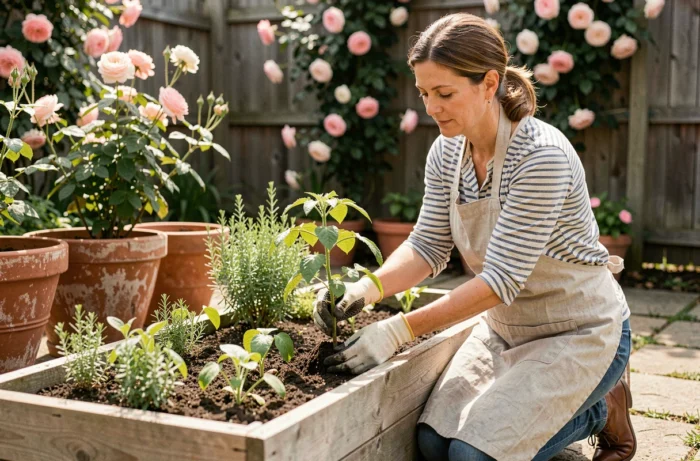
The regulations on phytopharmaceutical products in private gardens, the water constraints reshaping plant palettes, and the evolution of ranges in garden centers have been redefining the sector for several seasons. Closely following these changes allows for the adaptation of practices before technical dead ends manifest during full cultivation.
Ban on synthetic pesticides in private gardens: what this changes in garden centers
Since July 1, 2022, the use of synthetic phytopharmaceutical products is prohibited in private gardens for residential use. The ban applies to the place of use (garden, terrace, recreational space), not just the status of the user. Only three categories remain authorized: biocontrol products, low-risk products, and those approved for organic farming.
For garden centers and nurseries, this constraint has profoundly reconfigured the shelves. The ranges of classic chemical herbicides have disappeared from public aisles. We observe that demand has shifted to biological auxiliaries, plant extracts, and organic mulches, with an increased need for technical support at the counter.
The most common trap remains the online purchase of non-compliant products, imported outside the approved circuit. A gardener who uses a synthetic herbicide in their garden is subject to a fine, even if they purchased it legally in another country. The content published on Jardin Jade news allows for tracking these regulatory developments and the validated alternatives for each use.
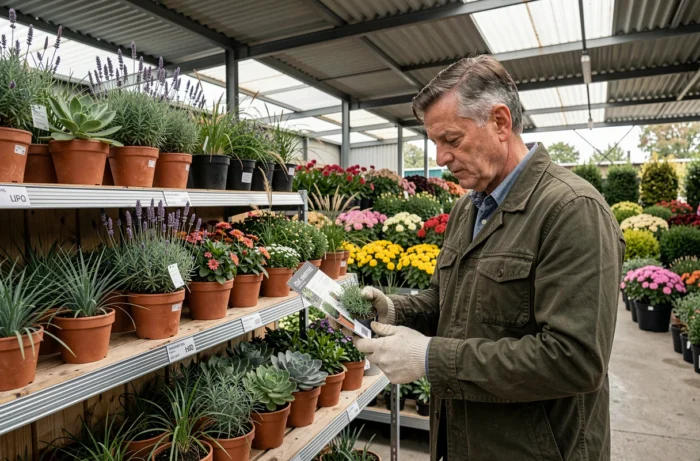
Garden without watering: plant palettes and substrates adapted to water stress
The dry garden is no longer a Mediterranean niche. Recurring water restrictions in most French departments are prompting nurserymen to rethink their selections. Xerophytic plants (gaura, perovskia, yarrow, stipa-type grasses) are gaining ground in catalogs, including in oceanic and semi-continental areas.
The substrate plays a role at least as crucial as the varietal choice. A soil amended with pumice or coarse sand improves drainage and limits root stagnation, the primary cause of mortality in drought-resistant plants that are poorly established. Mineral mulching (slate, gravel, pebbles) is gradually replacing organic mulching in dry beds, as it does not retain moisture on the surface.
Trees and shrubs for non-irrigated land
The choice of a tree for a garden without watering is not limited to olive and fig trees. We recommend also considering the following species, suited to draining soils and long summers:
- The holm oak (Quercus ilex), evergreen, heat-tolerant, and suitable for poor calcareous soils, with moderate growth that fits medium-sized gardens
- The Judas tree (Cercis siliquastrum), whose bright pink spring flowering compensates for the lack of summer flowers in a dry bed
- The broadleaf Phillyrea (Phillyrea latifolia), a local alternative to privet for low hedges without irrigation
A tree planted in autumn in well-drained soil requires watering follow-up only during the first year. After this rooting period, water autonomy is achieved for the majority of these species.
Garden product trends: what is emerging in garden centers for the upcoming season
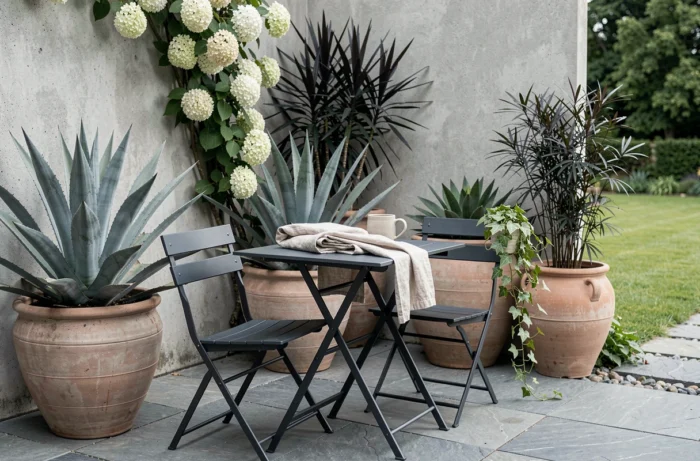
Professional trade shows like the JdC Garden Trends in Marseille set the course for upcoming collections. The Amalfi Coast aesthetic, presented at the last edition by the Chlorosphère agency, influences outdoor decoration ranges: lemony colors, authentic materials, and azure design are found on pots, furniture, and terrace accessories.
This aesthetic shift reflects an underlying trend. The garden is treated as an additional living space, with a level of decorative demand comparable to the interior. The categories of garden furniture, outdoor lighting, and low-voltage solar lighting are increasing in sales, while classic consumables (fertilizers, potting soils) are stagnating in volume.
Biocontrol and new auxiliaries
The biocontrol segment remains the most dynamic in garden centers. Entomopathogenic nematodes against beetle and crane fly larvae, trichogramma against box tree moth, and larval ladybugs against aphids have firmly established themselves in the offering.
The challenge for the point of sale lies in the cold chain and seasonality. Biological auxiliaries have a short usage window, often just a few weeks, and their effectiveness drops if storage conditions are not met. This is an area where in-store advice makes all the difference compared to online purchases.
Garden monitoring: why following industry news changes practice
Gardening is undergoing rapid changes driven by regulations, climate, and industrial offerings. A product authorized one season may disappear the next. A variety recommended in classic guides may prove unsuitable for the new summer conditions of a region.
Following a specialized information source allows for anticipating three concrete elements:
- The withdrawals or restrictions of phytosanitary products, which sometimes occur mid-season without public communication
- The new varieties tested under real conditions by local nurserymen, which are more reliable than generic online sheets
- The price fluctuations on substrates and amendments, which vary based on transport costs and the availability of raw materials
An informed gardener reduces planting failures and unnecessary expenses. Industry monitoring is not a luxury for professionals; it is a decision-making tool for anyone investing time and money in their garden.
The upcoming seasons will intensify water and regulatory pressure. Garden centers that document these changes and share reliable technical content will become the go-to contacts, far beyond the simple act of selling.