
Between UEFA’s new financial framework that reshuffles the deck in the Champions League, an unprecedented men’s US Open final, and a Vuelta nearing its conclusion, the sports return of September 2026 concentrates challenges rarely gathered in the same week. What indicators allow us to measure the magnitude of these events and identify those that will leave a lasting mark on the sports landscape?
UEFA squad cost rule: the 70% revenue cap in effect
The Financial Fair Play as we knew it no longer exists. UEFA has been implementing its Financial Sustainability Regulations since the 2025-2026 season, a framework structured around three pillars: solvency, stability, and cost control.
The most restrictive mechanism is the squad cost rule. Expenses related to the professional squad (player and coach salaries, transfer amortization, agent commissions) can no longer exceed 70% of the club’s revenue. The transition has been gradual: 90% during the 2023-2024 season, then 80% in 2024-2025, before the final threshold this year.
| Season | Squad cost rule cap | Regulatory framework |
|---|---|---|
| 2022-2023 and before | No fixed ratio | Financial Fair Play (old FFP) |
| 2023-2024 | 90% | FSR – transitional phase |
| 2024-2025 | 80% | FSR – transitional phase |
| 2025-2026 | 70% | FSR – definitive application |
In 2026, several European clubs have already faced financial sanctions based on this new framework. Chelsea, Barcelona, Aston Villa, and Lyon are among the teams affected, with combined fines amounting to several tens of millions of euros. The shift from the old FFP to the FSR changes the logic: it no longer only penalizes accumulated losses, but the structural imbalance between payroll and revenue.
To monitor the impact of these rules on transfer strategies in Ligue 1 and European championships, analyses published on mordudesport.fr regularly detail the financial decisions of French clubs.

US Open men’s final: Shelton vs. Zverev, two opposing profiles
Ben Shelton will play his first Grand Slam final against Alexander Zverev. This duel illustrates a generational and stylistic gap that goes beyond the simple match result.
Shelton, a left-hander with a devastating serve, has built his path at the US Open on raw power and the ability to shorten rallies. Zverev, a regular finalist in major tournaments, relies on consistent baseline play and a more patient tactical approach.
What the men’s draw in New York reveals
The absence of Djokovic, Nadal (retired), and Alcaraz in the final four confirms a shift that has already begun. Men’s tennis is entering a cycle without an undisputed number one, where final spots are determined more by current form than by established hierarchy.
This configuration makes Grand Slam tournaments less predictable. It also alters television ratings: broadcasters are betting more on the narrative of the journey than on guaranteed matchups, which benefits players capable of creating an event early in the tournament.
Vuelta 2026: stakes of the general classification before the 20th stage
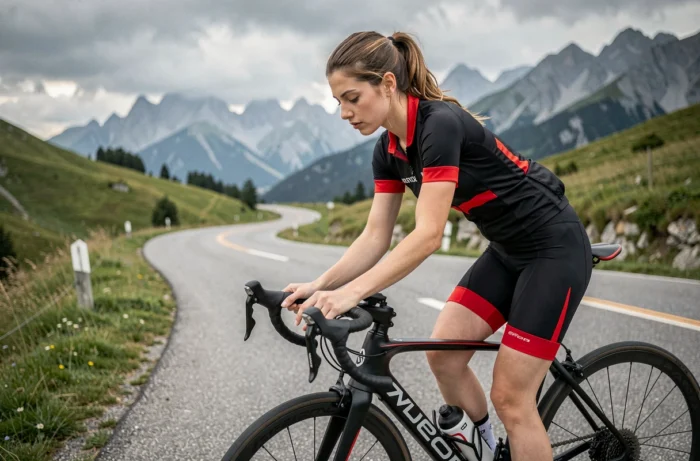
The Tour of Spain approaches its final stages with a still tight general classification. The 20th stage, traditionally decisive in the mountains, concentrates the hopes of those vying for the red jersey.
Paul Seixas, who caught attention during the GP of Quebec won by Remco Evenepoel, embodies the new wave of Francophone cycling. Evenepoel dominated the Quebec race from start to finish, reminding us of his ability to perform in short formats after three weeks of a Grand Tour.
French cycling: between Vuelta and North American classics
The September 2026 calendar forces teams to choose between the end of the Vuelta and the Canadian classics. This overlap creates tactical dilemmas:
- General classification leaders remain focused on Spain, depriving their teams of lieutenants for Quebec and Montreal
- Punchers and breakaway specialists prefer the North American classics, where UCI points are accessible without three weeks of wear
- Young riders like Seixas find a media showcase here, even with modest results against the favorites
Ligue 1 and Top 14: a tense return for French clubs
In football, the negative spiral of OM under Bruno Genesio fuels questions. Several consecutive away defeats place the Marseille club in a rare statistical situation, unprecedented since the late 1970s according to data compiled by sports media. The match against Rennes crystallized doubts, with Timothy Weah publicly taking responsibility for the defeat.
In rugby, the Top 14 resumes with uncertainties surrounding anticipated matchups like Toulouse-UBB. Racing 92, on the other hand, continues to deliver disappointing performances that their staff struggles to analyze purely from a technical standpoint.
French national team: Zidane’s list under scrutiny
Zinédine Zidane’s first list as coach has provoked mixed reactions. Several players regularly called up in recent seasons are not included, while the question of Kylian Mbappé’s captaincy remains open. The generational renewal of Les Bleus is accelerating, with choices favoring club form over established status.
Women’s basketball: the Bleues in the World Cup semifinals
The French women’s basketball team has qualified for the World Cup semifinals. Gabby Williams, the captain, has claimed an assertive leadership role, expressing her pride in playing with a certain competitive ego.
This journey comes at a time when women’s basketball is gaining media visibility. The viewership of international women’s matches is increasing, driven by well-known players and enhanced coverage from sports streaming platforms.
The week of September 12, 2026, concentrates turning points in at least four major disciplines. The new financial rules from UEFA are reshaping the competitiveness of European clubs, men’s tennis is searching for its next leader, cycling is managing a fragmented calendar, and French sports is oscillating between crises (OM, Racing 92) and promises (women’s basketball, Zidane’s selection). On-field data, more than speeches, will decide.