
Intestinal parasites in dogs and cats do not disappear from the home when the tablet is swallowed. A dewormer kills adult worms in the digestive tract, but the microscopic eggs already dispersed on cushions, blankets, and bedding remain viable long after treatment. Understanding the cycle of these eggs allows for adjusting the washing frequency and avoiding silent reinfestation.
Parasitic Cycle and Bedding Contamination
An animal carrying roundworms (ascarids) or tapeworms releases eggs through its feces, but also through simple physical contact. When it lies down, scratches, or grooms itself on its bedding, eggs settle on the fabric. The orally administered dewormer acts on the parasites present in the intestine. It does not neutralize the eggs already expelled into the environment.
Data from pediatric recommendations on pinworms in children shed light on this point: parasite eggs can survive two to three weeks on bedding and clothing. This figure, well documented in human health, justifies a similar precautionary principle for the environment of a pet. Washing the bedding only once after deworming is not sufficient if eggs were deposited the day before or the day before that.
Knowing when to wash bedding after deworming directly depends on this survival window of the eggs, which imposes a sustained washing rhythm for several weeks.

Washing Temperature and Elimination of Parasite Eggs
A low-temperature cycle does not destroy the eggs of most helminths. The protective membranes of these eggs resist the conventional detergents used in cold washing.
To achieve reliable elimination, washing must be done at high temperatures. Heat denatures the proteins of the egg shell and prevents any subsequent hatching. Apply this principle to the basket, covers, blankets, and any textile where the animal regularly lies down.
Which Textiles to Wash First
- The animal’s main bedding (basket, cushion, dedicated blanket), which concentrates the highest parasitic load due to direct and prolonged contact.
- The sheets and pillowcases of the owners’ bed, if the dog or cat sleeps there or goes up regularly, even for a few minutes a day.
- The sofa covers and living room blankets, often overlooked while they accumulate hair and residues just like bedding.
Textiles that cannot withstand high-temperature washing (some memory foam cushions, for example) can be placed in the freezer for several hours. The intense cold weakens the shell of the eggs, although it remains less effective than heat.
Washing Frequency After Deworming: Why Once Is Not Enough
The majority of articles on the subject recommend washing bedding immediately after administering the dewormer. This step is necessary, but a single wash does not cover the survival window of the eggs.
A treated animal may still expel parasitic residues in the days following treatment. Some dewormers cause the gradual elimination of dead worms over several days, during which new eggs may end up on the fabric.
Three-Week Washing Protocol
To cover the duration of egg viability, washing the animal’s bedding every three to four days for two to three weeks following deworming significantly reduces the risk of reinfestation. This frequency may seem burdensome, but it corresponds to the biological reality of the parasitic cycle.
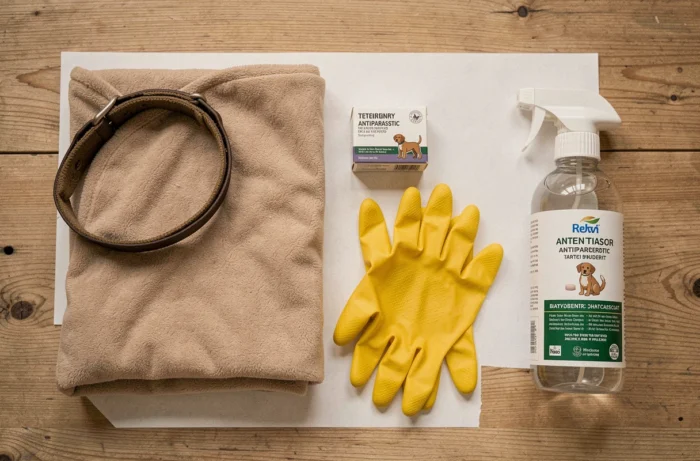
Having two interchangeable covers simplifies rotation: while one cover is in the wash, the other remains in place. This system prevents leaving the animal without bedding or postponing washing due to a lack of replacements.
Deworming and Overall Household Hygiene: Complementary Actions
Washing bedding only addresses one vector among others. Ascarid eggs can persist for several years in the soil, making the cleaning of outdoor resting areas equally necessary.
Picking up the animal’s feces in the garden, on the balcony, or during walks limits the spread of eggs in the shared environment. Feces should never be composted: eggs survive the usual conditions of home composting.
Flea Treatment and Its Link to Tapeworms
The flea is a direct vector of the tapeworm (Dipylidium caninum). An animal that ingests a flea carrying tapeworm larvae becomes reinfested, even if it has been recently dewormed. Combining deworming and external antiparasitic treatment reduces this cross-reinfestation circuit.
Vacuuming the bedding areas before each textile wash removes some flea eggs and larvae present in the fibers. Empty the vacuum bag or container immediately after, preferably into an outdoor trash can.
Adjusting Deworming Frequency to Risk Profile
Recent recommendations from ESCCAP are evolving towards a stratified deworming based on environmental risk. An indoor cat without outdoor access does not present the same level of exposure as a dog that frequents areas where foxes and rodents live. The veterinarian can adjust the treatment frequency based on these criteria, rather than applying the same schedule for all animals.
This individualized approach also modifies the associated textile hygiene rhythm: an animal treated four times a year requires four cycles of enhanced washing, while an animal dewormed every month in a high-risk context demands near-constant vigilance regarding the cleanliness of its bedding.
Regular washing of bedding after deworming remains one of the simplest actions to break the reinfestation cycle. Two covers in rotation, high-temperature washing every three to four days for three weeks, and synchronized flea treatment with deworming cover the main risk for the vast majority of households with dogs or cats.