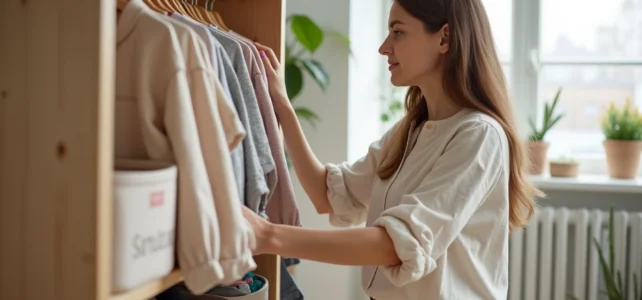
A young child changes clothing sizes several times a year. Between the bodysuits worn for three weeks and the winter coats worn a dozen times, closets overflow, budgets rise, and bags of too-small clothes accumulate. Renting children’s clothing offers an alternative that addresses all three problems at once.
The true cost of a child’s rapidly growing wardrobe
Have you ever counted the number of items a baby wears between 0 and 2 years old? The answer exceeds what one might imagine. Between bodysuits, pajamas, mid-season outfits, and going-out clothes, each size range represents an almost complete renewal of the wardrobe.
The problem is not just financial. It’s also a time issue. Sorting, storing, reselling, or donating clothes that have become too small takes hours that parents would prefer to spend on other things. Renting eliminates the management of post-use: you return the clothes, someone else takes care of them.
Families who have tried the service on the Hylla website for families often describe the same relief: no longer having to anticipate the next size, no longer storing boxes in the attic, no longer feeling guilty in front of piles of barely worn clothes.
Baby clothing rental: how the service works on a daily basis
The principle is simple. You choose a selection of clothes suitable for the child’s age and season. You receive them, you use them. When the child grows or the season changes, you return them and receive the next size.
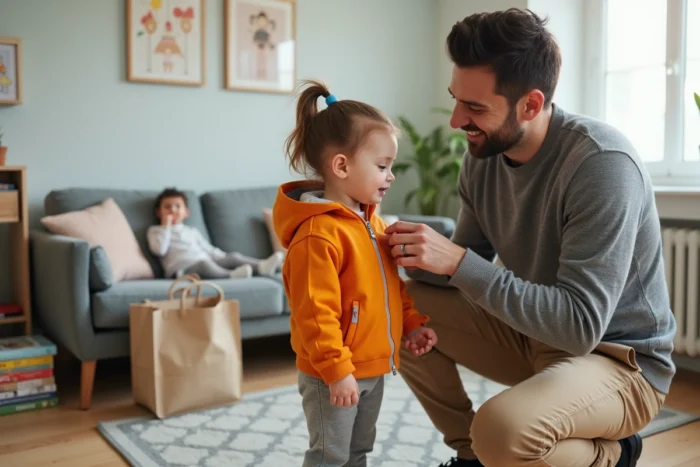
In practice, most rental services operate by box or monthly subscription. Here’s what distinguishes a well-thought-out offer from a gimmicky one:
- The quality of the brands offered: clothes designed to last through several rental cycles withstand repeated washes better than a disposable fashion item bought online
- The flexibility of the schedule: being able to exchange a box mid-month when the child suddenly grows a size (which often happens around 6-9 months)
- The condition check between rentals: professional cleaning, checking closures, replacing damaged items
- The option to keep a favorite item, at a reduced price compared to new
A good rental service outfits the child, not the closet. The goal is to have only what is being worn in circulation, not what is waiting or has already been outgrown.
Anti-fast fashion law and circular fashion: what is changing for families
France has adopted a bill aimed at reducing the environmental impact of ultra-fast fashion. This text defines in law what fast fashion is and provides concrete measures that directly affect how families dress.
Among the provisions: a ban on advertising for ultra-fast fashion products, financial penalties through the extended producer responsibility system, and the obligation to display a message encouraging reuse, repair, and recycling. The text also introduces education on sustainable consumption into school programs.
For parents, this means that the commercial environment will gradually push towards alternatives to disposable new items. Renting children’s clothing fits directly into this circular fashion logic. It is no longer a militant approach; it is an option that the regulatory framework is making increasingly visible and accessible.
In fact, the volume sales of clothing have declined in recent years, while the circular fashion market (second-hand, rental, upcycling) is growing. Renting rather than buying is no longer a marginal choice; it is a fundamental trend.
Concrete advantages of renting to dress your children
There is a lot of talk about ecology and budget. These are real arguments, but renting also solves everyday irritants that parents know well.
The first is the mental load associated with clothing. Anticipating the seasonal needs of a growing child requires constant vigilance. With a subscription service, this anticipation is delegated. The right size arrives at the right time without thinking about it.
The second is space. In a family apartment, every square meter counts. Eliminating the storage of clothes waiting to be donated or resold frees up drawers and shelves for what is truly needed.
The third concerns quality. The clothes offered for rent are generally from brands designed to last. A bodysuit rented five times costs society less than a bodysuit bought new and thrown away after three washes. Families thus gain access to a selection of higher-quality clothing than they would buy for the same price new.
When renting is not suitable: limits to know
Renting does not replace everything. Some items have sentimental value (the baptism outfit, the first pajamas) that parents want to keep. Others, like underwear or walking shoes, are difficult to share for hygiene or wear reasons.
Renting works best for everyday clothing with rapid turnover: bodysuits, pants, sweaters, rain suits, coats. These are precisely the items that are most costly to renew and least worn before being outgrown.
- Ideal items for renting: outerwear, seasonal outfits, everyday sets in sizes that change quickly (0-3 years)
- Items to buy: underwear, shoes, clothing with high sentimental value
- Gray area: ceremony or party outfits, which some services offer for occasional rental
Adapting your approach according to the type of clothing allows you to make the most of renting without frustration. The most realistic model for a family combines a few targeted purchases with a rental subscription for the bulk of the wardrobe.
The question is not whether to choose between buying and renting, but to place each item in the circuit that corresponds to its actual use. A coat worn for two months does not need to be owned. A knitted teddy bear from a grandmother does.