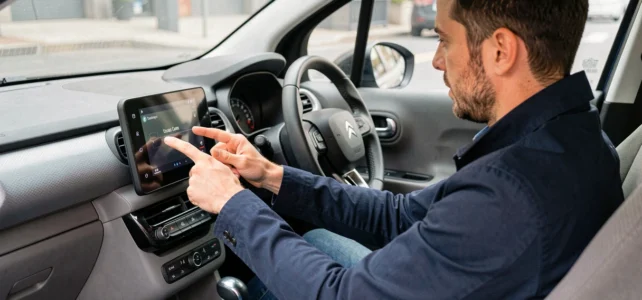
On the Citroën C3, the eco mode reactivates with each start. You turn the key, buckle your seatbelt, and the car decides on its own to limit engine response. In the city, when merging onto a highway or climbing a loaded hill, this limitation can be frustrating. The question comes up on all forums: how to get rid of it, and above all, is it always a good idea?
Eco mode on Citroën C3: what the system actually limits
Eco mode is often talked about as just a light on the dashboard. In practice, its action affects several parameters simultaneously. The engine control unit modifies the injection mapping, reduces air conditioning power, and adjusts the throttle curve to smooth out acceleration.
The result is especially noticeable in two situations: low-speed acceleration and overtaking. The pedal becomes soft, and the engine takes longer to respond. On a small PureTech engine, where the available torque is already limited, this latency turns some maneuvers into exercises in patience.
Before trying to remove the eco mode on the Citroën C3, it’s worth understanding that this limitation is not a flaw. The manufacturer calibrated it to meet emission standards and reduce consumption in urban cycles.
The nuance is that the actual gain depends on the driving profile: in smooth city traffic, eco mode can make a measurable difference. In dense traffic with frequent stops, the engine demands more from the starter and battery via start-stop, which partially cancels out the benefit.
Disabling eco mode on C3: procedure by generation
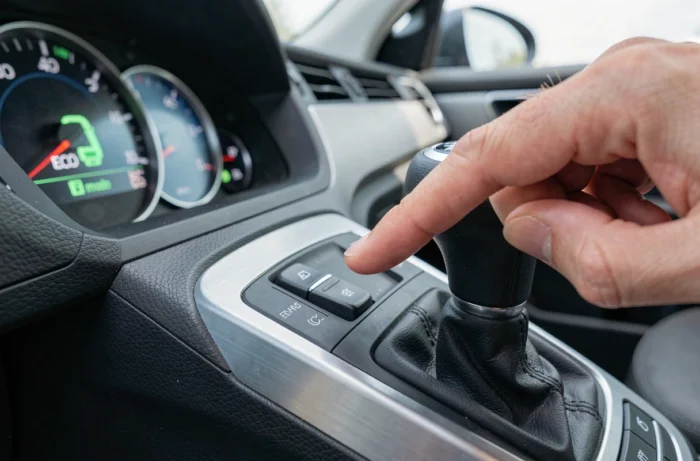
The procedure varies from one model year to another, and this is where many drivers get lost. On third-generation C3s (from 2016), a physical “ECO” button is generally accessible near the gear lever or on the center console. A single press is enough to turn off the mode. The light goes out, and engine response returns to normal.
The mode automatically reactivates on the next restart. This is the most frustrating point. No setting in the vehicle menu allows you to permanently memorize the “eco off” preference.
The question of reprogramming for permanent deactivation
On specialized forums, discussions about reprogramming via diagnostic tools like Diagbox or Lexia are common. The idea is to modify a parameter in the control unit so that eco mode does not activate by default at startup.
This manipulation exists, but it has concrete limitations:
- It requires a diagnostic tool compatible with the PSA protocol, which excludes most consumer OBD scanners
- A software update at the dealership can reset the parameter and restore original behavior
- On certain model years, the modification also affects start-stop behavior, which can generate unwanted effects on the battery charging cycle
Feedback varies on this point: some drivers report stable reprogramming over several years, while others notice a return to factory settings after a workshop visit. Reprogramming is not a guaranteed long-term solution.
Is it really necessary to permanently disable eco mode?
The temptation to turn off eco mode once and for all is strong. However, several recent usage-oriented sources recommend a more contextual approach. Eco mode has a real benefit on smooth roads, in stabilized cruising, or in urban areas at constant speed. Under these conditions, the reduction in consumption is noticeable without compromising comfort.
The situations where deactivation is justified are more specific:
- On prolonged climbs, where the engine mapping limitation forces more frequent downshifts and strains the transmission
- During overtaking on country roads, where response latency creates a real risk of overly long maneuvers
- In very dense urban traffic, where frequent restarts of the start-stop system put more demand on the battery and starter than the fuel savings
- With air conditioning running at full load in high heat, when eco mode reduces compressor power and the cabin no longer cools properly
The practical logic is to press the ECO button when the situation demands it, rather than seeking a permanent deactivation that also eliminates the real benefits of the system.
Driving comfort on C3: adjustments that change as much as eco mode
Eco mode is often blamed for discomfort that comes from elsewhere. Recent guides emphasize a point rarely discussed in driving mode conversations: the adjustment of the driving position influences comfort perception as much as the engine mode.
A seat that is too far back forces you to stretch your leg on the accelerator, distorting the feeling of pedal response. A seatback that is too reclined strains the back on long trips and gives the impression of a “soft” vehicle when the issue is postural. On the C3, where the seating position is relatively high and the steering wheel is not adjustable in depth, these adjustments matter.
Before adjusting electronic settings, you can simply check the seat height, seatback angle, and distance to the steering wheel. A well-positioned driver perceives the vehicle’s reactions better and feels less latency from eco mode because their controls are more precise.
Battery and start-stop: a direct link with eco mode
On C3s equipped with start-stop, the state of the battery conditions the operation of eco mode. An aging or insufficiently charged battery can cause erratic behaviors: start-stop deactivates on its own, eco mode blinks or refuses to engage. Some owners interpret these symptoms as a malfunction of eco mode when the problem actually lies with the battery.
Checking the battery voltage and charge state remains the first reflex before any software manipulation. A battery nearing the end of its life produces exactly the same symptoms as a bug in the engine management system.
The eco mode of the Citroën C3 is neither a gadget nor a definitive constraint. The best approach is to manually turn it off when the context demands it, during climbs, overtaking, or in high heat, and to leave it active when driving is stabilized. Seeking a permanent deactivation exposes you to resets at the dealership and removes a tool that, under the right conditions, does its job well.