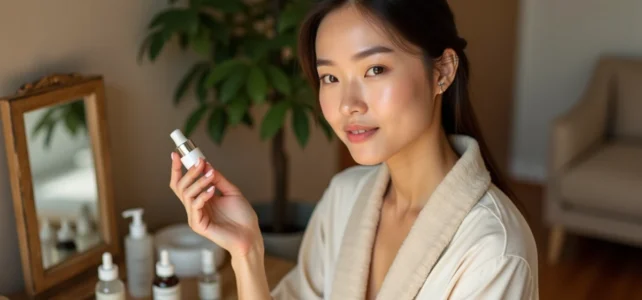
Beauty in everyday life relies less on the accumulation of products and more on understanding a few basic mechanisms. The skin, hair, and complexion respond to specific physiological principles: hydration, cellular renewal, and protection against external aggressions. Mastering these fundamentals allows for the creation of a short, tailored, and truly effective routine.
Skin prep: the skin preparation that replaces thick foundation
Since 2024, an approach has structured the way skin is prepared before any makeup application. The principle of skin prep is to address the texture and hydration of the skin beforehand, so that makeup sits on a smooth and even surface.
The hashtag #skinprepformakeup has over 122 million views on TikTok. This popularity reflects a shift in priorities: the quality of the complexion depends more on skincare than on the amount of makeup.
Specifically, a skin prep protocol involves a gentle cleanse, a light exfoliating pad (lactic acid or PHA depending on skin sensitivity), a hydrating serum, and then a day cream suitable for the skin type. A setting mist between each layer helps the active ingredients penetrate without creating a greasy film. By following the advice from Beauté Ultime, this preparation logic becomes a morning reflex rather than a lengthy ritual.
The desired result is called the “no texture” finish: minimized pores, unified skin texture, zero unwanted shine. A simple veil of BB cream or loose powder is then sufficient.
Minimalist beauty routine: fewer products, more results
The cosmetics industry is going through a phase of streamlining. The ten-step routines inherited from K-beauty are losing ground in favor of short protocols centered around a few key products. Consumers prefer multifunctional formulas rather than layering products.
This minimalist approach is not a compromise. It is based on a simple dermatological principle: too many products applied simultaneously can disrupt the hydrolipidic film and cause reactions (breakouts, tightness, excess oil).
The pillars of an effective facial routine
Three steps are sufficient morning and evening to maintain healthy skin:
- A cleanser suitable for the skin type (foaming gel for combination skin, milk or oil for dry skin), applied gently to preserve the skin barrier
- A hydrating treatment containing targeted actives: hyaluronic acid for deep hydration, niacinamide for radiance and pores, or vitamin C in the morning for antioxidant protection
- A minimum SPF sun protection in the morning, including in winter and on cloudy days, as UV rays penetrate clouds and accelerate skin aging
In the evening, careful makeup removal replaces sun protection. Double cleansing (oil followed by gel) remains the most reliable method for removing makeup, sunscreen, and pollution without irritating the skin.
Hair and complexion: two beauty markers linked to diet
Topical care does not compensate for an internal imbalance. The quality of hair and the radiance of the complexion directly depend on micronutrient intake. Zinc helps regulate sebum, iron is involved in the oxygenation of skin cells, and fatty acids contribute to skin elasticity.
A varied diet incorporating colorful vegetables, complete proteins, and sources of healthy fats (avocado, nuts, fatty fish) measurably impacts beauty within a few weeks. Water remains the first beauty gesture: insufficient hydration shows on the complexion even before it is physically felt.
Hair: adapting washing to the scalp
A daily shampoo is not a universal norm. Dry scalps do not tolerate frequent washing that removes protective sebum. Conversely, an oily scalp may require more regular cleansing, but with a gentle sulfate-free shampoo.
The most underestimated gesture remains rinsing with lukewarm rather than hot water. Very hot water opens the hair cuticles and dries out the scalp. A final rinse with cold water closes the cuticles and adds shine without any additional products.

Everyday makeup: target two areas rather than covering everything
Enhancing your face every morning does not require mastering professional makeup techniques. The most effective strategy is to choose two areas of the face and focus the effort there.
For most face shapes, the duo of an even complexion + structured eyes yields the most visible result in minimal time. A concealer on dark circles, a dusting of powder on the T-zone, followed by mascara and a touch of neutral eyeshadow is enough to transform a tired face.
Another combination works well: colored lips + defined brows. Brushed and slightly filled brows frame the eyes. A lipstick or tinted balm provides an immediate pop of color. The rest of the face can remain bare or simply hydrated.
- Mature skin: favor creamy textures that do not settle into fine lines, avoid overly matte powders
- Young skin prone to acne: opt for non-comedogenic formulas and a localized green concealer on redness before foundation
- Normal skin without marked imperfections: a tinted cream with SPF is a great alternative to classic foundation
Everyday makeup benefits from staying light. Current trends confirm this direction: fewer layers, more care integrated into formulas.
Ultimately, everyday beauty comes down to the consistency of simple gestures rather than the multiplication of products. Well-prepared skin, a few targeted actives, a balanced diet, and strategic makeup produce more lasting results than any complex routine. The true luxury is knowing your skin well enough to give it only what it needs.